

Every year begins with promises we’re confident we’ll keep and quietly forget by February. Eat better. Exercise more. Stress less. The gap between intention and reality is usually wide. Markets work the same way.
2025 was filled with confident declarations, many of them wrong, some of them expensive. And yet, by year-end, many major asset classes finished at or near all-time highs. The story wasn’t about precision. It was about endurance.
Investors continued to be rewarded for owning (stocks) rather than lending (bonds). That’s not true every year, but it has been true over long stretches of history. Ownership is volatile. Lending feels safer. Over time, ownership usually wins.
After more than 15 years of U.S. stock outperformance, 2025 offered a reminder of why diversification exists. International stocks outperformed domestic stocks by a wide margin. Not because Europe solved its fiscal problems. Not because Asia reversed its demographic decline. China still saw birth rates near historic lows. Japan still sells more adult diapers than children’s diapers.
International stocks outperformed for reasons that were largely unpredictable – currency moves, policy responses, timing. And that’s the point. Diversification doesn’t work because you know when it will help. It works because you don’t.
Earlier in the year, as U.S. stocks fell nearly 20%, international stocks were up roughly 10%, quietly doing the job they were included in diversified portfolios to do: providing balance when things feel uncomfortable domestically. The mistake now would be to chase what just worked just as it would have been a mistake to abandon it before it did.
Bonds, too, played their role again. After one of the worst stretches in their history (yes, 2022 was brutal) bonds delivered solid returns in 2025 as interest rates began to trend lower. They reminded investors that “boring” doesn’t mean useless. It often means misunderstood.
The Federal Reserve cut interest rates while the economy remained relatively strong, which is an uncommon setup historically. In the handful of times this has occurred before, markets went on to post positive returns. That’s encouraging, but it’s not a promise. History offers perspective, not guarantees.
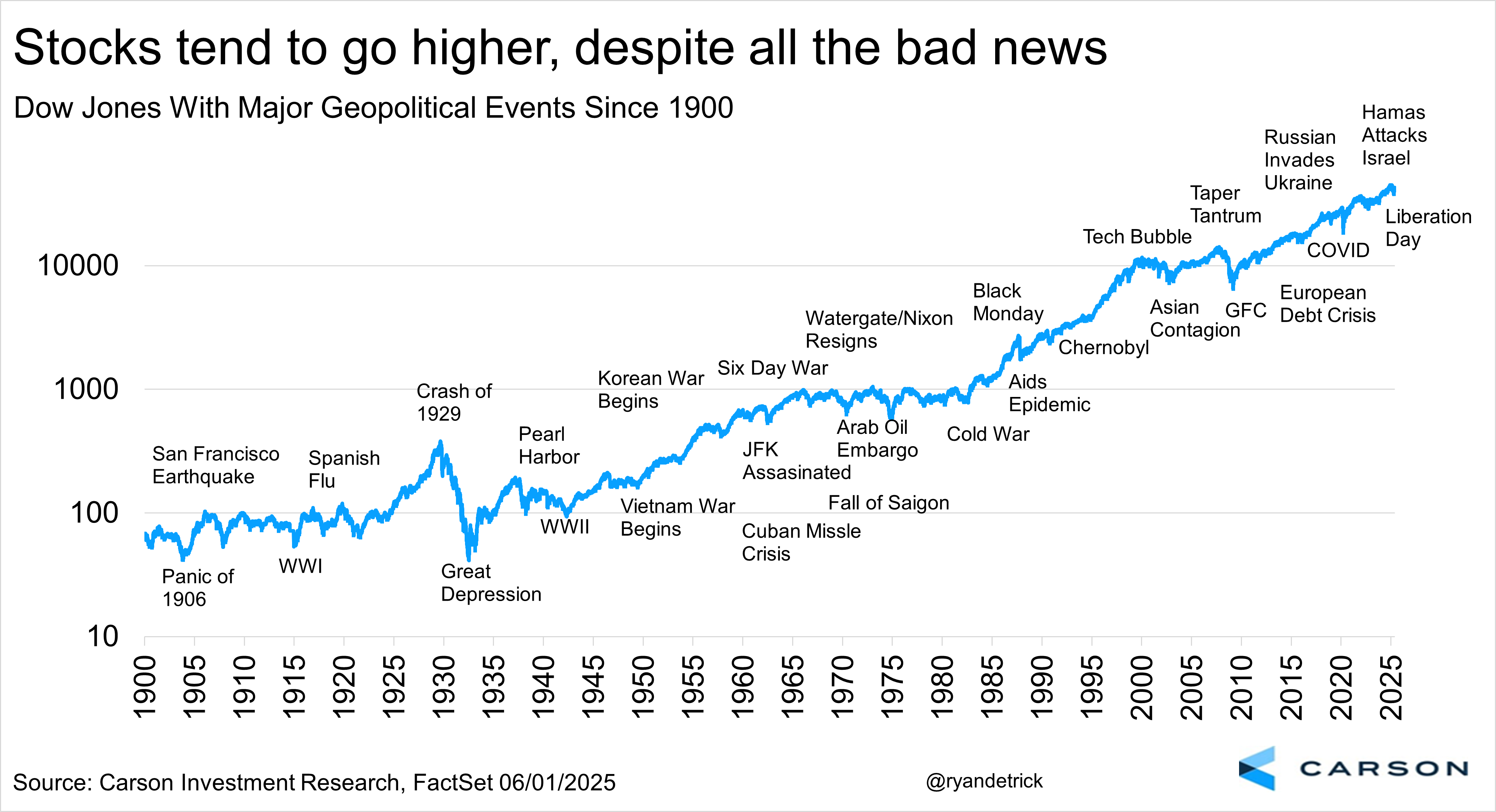
Political pressure on the Fed feels uniquely intense today, but it isn’t new. Presidents have blamed central banks for elections lost long before this generation was paying attention. Market volatility and political tension predate us all. The U.S. will celebrate its 250th birthday in 2026. We’ve been through worse.
What’s easy to forget is how violent the year felt at the time. Early 2025 marked the fourth-worst start to a year in market history. Forecasts were slashed. Confidence evaporated. Wall Street’s largest institutions armed with vast resources and brilliant minds issued dire predictions that aged poorly within months.
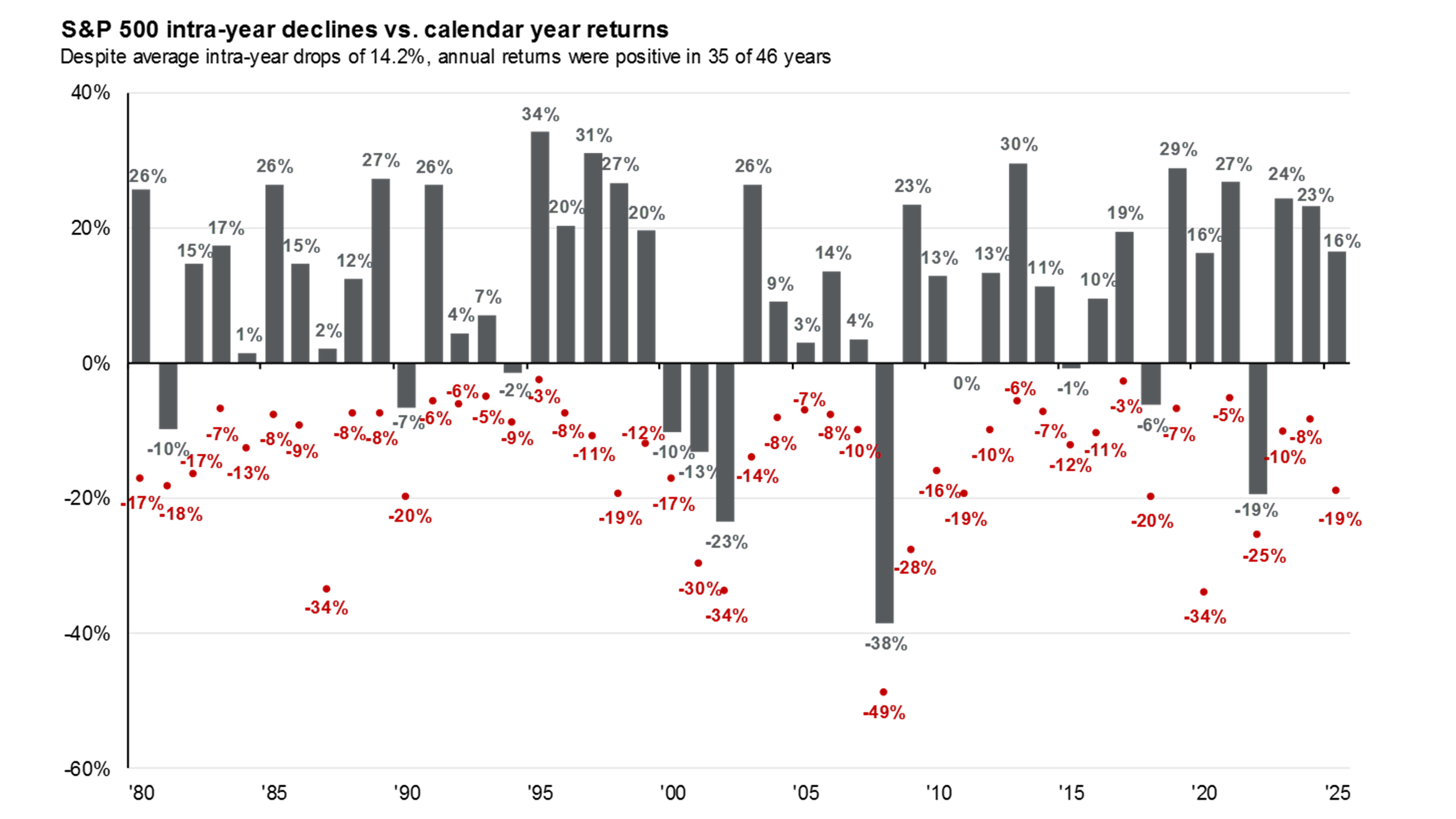
That’s not a criticism. It’s a reminder. The stock market is a history of recoveries. Every year since 1980 has included a drawdown, averaging about 14%. And yet, over that same period, stocks delivered roughly 12% annualized returns. Pain is common. Progress is persistent.
The same emotional traps show up again and again. One is refusing to invest when markets are at all-time highs. Another is piling into whatever is working now. In 2025, a small group of technology stocks once again drove a disproportionate share of returns. That feels new, but it isn't. Research shows that a tiny fraction of stocks (according to one 2018 study, approximately 4%) have generated all the net wealth gains in U.S. market history. The winners are few. They’re also nearly impossible to identify in advance. That’s why diversification isn’t about settling for average returns. It’s about giving yourself a chance to own the outliers that matter.
Will there be a bubble around AI? Almost certainly, at some point. Every major technological leap has come with excess. The internet had one. Railroads had one. Housing had one. Progress and speculation have always traveled together. What matters is not avoiding every bubble – it’s surviving them. Cisco, the star of the dot-com era, only just reclaimed its old highs this year, 25 years later. The S&P 500 total return (including dividends) index increased roughly seven-fold over that same period. You don’t need to pick the winners. You need to stay in the game.
That’s the quiet lesson of 2025. Markets reward patience far more reliably than they reward prediction. They punish overconfidence more consistently than they punish ignorance. The future will always feel uncertain. That’s the price of long-term returns.
As we enter 2026, the advice remains boring because it works: diversify, keep investing, optimize what you can control, and ignore anyone who claims to know what happens next. We may still keep our New Year’s resolutions. We might even become as disciplined as we hope. But just like markets, it’s best not to count on perfection.
Wishing you a safe, thoughtful, and prosperous 2026.
Unless otherwise indicated, commentary on this site reflects the personal opinions, viewpoints and analyses of the author and should not be regarded as a description of services provided by GatePass Capital or its affiliates. The opinions expressed here are for general informational purposes only and are not intended to provide specific advice or recommendations for any individual on any security or advisory service. It is only intended to provide education about the financial industry. The views reflected in the commentary are subject to change at any time without notice. While all information presented, including from independent sources, is believed to be accurate, we make no representation or warranty as to accuracy or completeness. We reserve the right to change any part of these materials without notice and assume no obligation to provide updates. Nothing on this site constitutes investment advice, performance data or a recommendation that any particular security, portfolio of securities, transaction or investment strategy is suitable for any specific person. Investing involves the risk of loss of some or all of an investment. Past performance is no guarantee of future results.
The best time to start is now. Personalized financial solutions don’t have to be difficult. We’d love to chat with you to learn more about who you are, what your goals are, and how we can help.
TALK TO AN ADVISOR